Ever feel like your manufacturing startup is a magnificent, innovative rocket ship… perpetually stuck in the mud, with various parts flying off in different directions? You’re pouring your heart and soul into creating incredible products, pushing the boundaries of what’s possible, but behind the scenes, it often feels like a chaotic circus act. We’re talking about the dizzying dance between countless spreadsheets, a flurry of frantic phone calls, the infamous “where exactly is that specific component?” quest, and the ever-present nagging worry about inventory levels. You’re hustling to innovate, scale operations, and keep your customers utterly delighted, yet you often find yourself drowning in a sea of manual processes and disconnected data. If this scenario hits a little too close to home, fear not, you are absolutely not alone in this manufacturing startup maelstrom. Many ambitious entrepreneurs launching new production ventures face a daunting, yet undeniable, truth: growth, while exciting, inevitably brings a tidal wave of complexity, and without the right foundational tools, that complexity can swiftly morph into an insurmountable wall of chaos. This is precisely why exploring effective, tailored ERP solutions for manufacturing startups isn’t just a smart strategic move; it’s rapidly becoming an absolute non-negotiable for both survival and truly sustainable expansion in today’s fiercely competitive, fast-paced market. We’re not just talking about upgrading your sticky notes; we’re talking about a transformative leap towards a unified, intelligent system that brings unparalleled order, crystal-clear clarity, and a genuine, lasting competitive advantage right to your fingertips. Imagine having real-time, actionable insights into every nook and cranny of your operation, from the raw materials arriving at your dock to the finished product leaving your facility – all accessible with just a few clicks. Picture a world where production schedules don’t feel like a frantic guessing game and critical customer orders aren’t merely isolated entries on a disparate Excel sheet, but an integral part of a seamless, end-to-end workflow. It might sound like a futuristic dream, but trust me, it’s grounded in smart business strategy, and it’s remarkably within reach for even the leanest, most agile manufacturing operations. Let’s dive deep into how these powerful systems can become your ultimate secret weapon, brilliantly transforming your operational headaches into streamlined, resounding successes.
Think of it like this: your manufacturing startup is a highly intricate orchestra. Each section—design, procurement, production, sales, finance—has its own sheet music, its own rhythm. But without a conductor, a central score, and a shared vision, it’s just a cacophony of individual efforts, no matter how talented each musician is.
That conductor, that unifying score, is an ERP system.
For too long, the common wisdom was that ERP (Enterprise Resource Planning) was solely for the big guns—the Fortune 500 giants with their sprawling factories and multi-million-dollar budgets. “Too complex!” “Too expensive!” they’d shout. But guess what? Times, they are a-changin’.
 The Startup Struggle: Why Spreadsheets Just Don’t Cut It Anymore
Remember “GearUp Innovations,” our fictional startup that makes those incredibly cool, modular camping gadgets? When they started, founder Alex was a spreadsheet wizard. Inventory in one file, orders in another, production schedules scrawled on a whiteboard. It worked, mostly, for the first few months.
But then, orders doubled. Then tripled. Suddenly, Alex was spending more time chasing data across disparate documents than innovating. Missed orders because of stockouts, production delays because a critical part was overlooked, and a cash flow forecast that looked more like a rollercoaster ride.
This isn’t just Alex’s story; it’s the reality for countless manufacturing startups.
A recent study by CB Insights actually highlighted that poor execution and management issues are among the top reasons startups fail. And what is often at the core of poor execution? Disconnected operations and a lack of real-time visibility.
Manual processes are like trying to race a Ferrari while constantly stopping to check your map, manually pump fuel, and change tires by hand. It’s simply not efficient, scalable, or sustainable.
What Exactly *Are* ERP Solutions for Manufacturing Startups?
At its heart, an ERP system is an integrated suite of software applications that manages and integrates core business processes for a company.
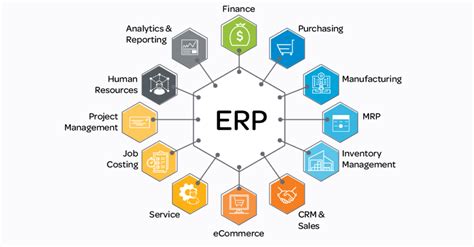
Think of it as the central nervous system for your manufacturing business. It connects all the disparate functions: manufacturing, inventory, supply chain, finance, sales, and even customer relations, all on one unified platform.
For manufacturing startups, this means moving from a jumbled mess of individual apps and manual entries to a single source of truth. Data flows seamlessly, tasks are automated, and decisions are made on solid, real-time information, not educated guesses.
It’s about making your entire operation smarter, faster, and much more resilient.
Dispelling the Myths: ERP Isn’t Just for Giants
The biggest myth hindering young manufacturers? That ERP is too complex or costly. This simply isn’t true anymore.
Thanks to cloud technology and specialized vendors, there are now incredibly robust, yet affordable and user-friendly, ERP solutions for manufacturing startups designed specifically with your lean, agile needs in mind.
Many operate on a subscription model, meaning no massive upfront software costs, and they’re often highly scalable, growing with you without needing a complete overhaul.
The Undeniable Advantages: Why Your Startup Needs ERP Yesterday
So, beyond just getting rid of spreadsheet hell, what tangible benefits do these systems bring to nascent production ventures? Let’s break it down.
1. Crystal-Clear Visibility and Control
Imagine knowing, at any given moment, precisely how many widgets are on your shop floor, how much raw material you have, and the exact status of every customer order.
ERP provides this “single source of truth.” According to a Panorama Consulting Solutions report, 93% of companies cite improved operational efficiency as a benefit of ERP, largely due to this enhanced visibility.
2. Supercharged Efficiency & Automation
Many repetitive, mundane tasks can be automated with ERP. From generating purchase orders based on inventory levels to tracking production progress, ERP takes the grunt work off your team’s plate.
This frees up your talented people to focus on innovation, problem-solving, and growing the business—not just managing paperwork.
3. Smarter Inventory Management
One of the biggest money pits for manufacturers is inefficient inventory. Too much, and you’re tying up capital; too little, and you face stockouts and missed opportunities.
ERP systems for manufacturing startups can help optimize inventory levels, reducing carrying costs and minimizing waste through features like demand forecasting and automated reordering. One industry estimate suggests that optimized inventory can reduce costs by 10-30%.
4. Enhanced Production Planning & Scheduling
Say goodbye to those frantic “where are we on job X?” moments. ERP helps you schedule production runs efficiently, allocate resources effectively, and track progress against deadlines.
This means fewer bottlenecks, smoother workflows, and ultimately, faster delivery to your customers.
5. Seamless Financial Management
Integrating your financials with your operational data is a game-changer. ERP combines general ledger, accounts payable/receivable, and payroll with manufacturing costs, providing a holistic view of your financial health.
This makes budgeting, forecasting, and compliance much easier, and significantly reduces the risk of errors.
6. The Power to Scale Without Breaking
This is arguably the most crucial benefit for a startup. When you grow rapidly, your current systems often can’t keep up. ERP systems are designed to scale, accommodating increased production, more customers, and new products without collapsing under the pressure.
It’s like building your house with expandable walls from day one, rather than trying to add new rooms to a rickety shed.
7. Improved Customer Satisfaction
When your internal operations are smooth, your customers feel it. Accurate order fulfillment, on-time delivery, and better communication all contribute to happier clients and repeat business.
In a world where customer experience is paramount, this is an invaluable competitive edge.
Choosing the Right ERP Solutions for Manufacturing Startups: A Practical Guide
Okay, you’re convinced. But with so many options out there, how do you pick the right one? Here’s what to consider:
1. Cloud-Based vs. On-Premise
For most startups, cloud-based (SaaS) ERP is the clear winner. It’s generally more affordable, easier to implement, requires less IT infrastructure, and offers greater flexibility for remote work.
Think of it as renting a fully-furnished, high-tech office instead of building one from scratch.
2. Industry-Specific Features
Does the ERP cater specifically to manufacturing? Does it understand discrete manufacturing, process manufacturing, or hybrid models? Look for features like BOM (Bill of Materials) management, production routing, quality control, and shop floor data collection.
A general business ERP might miss the nuances your production line desperately needs.
3. Scalability and Flexibility
Can the system grow with you? Can you easily add modules or users as your business expands? Look for systems that offer modularity, allowing you to start with core functions and add more sophisticated features later.
This future-proofs your investment.
4. Ease of Use and Implementation
You don’t have a massive IT department. The system needs to be intuitive for your team. Look for user-friendly interfaces, good training resources, and straightforward implementation processes.
A complex system that nobody uses is just a very expensive paperweight.
5. Total Cost of Ownership (TCO)
Beyond the subscription fee, consider implementation costs, training, and potential customization. Get clear pricing upfront. Many vendors offer tiered pricing models that are ideal for ERP solutions for manufacturing startups.
Remember, a small investment now can prevent much larger, costlier problems down the line.
6. Integration Capabilities
Will it play nicely with your existing accounting software, CRM, or e-commerce platform? Seamless integration prevents data silos and ensures a unified workflow.
Real-World Impact: A Quick Anecdote
Remember Alex from GearUp Innovations? He took the plunge. After researching several ERP solutions for manufacturing startups, he chose a cloud-based system tailored for small-to-medium manufacturers.
Initially, there was a learning curve, but within six months, the transformation was incredible. Inventory errors plummeted by 80%. Production lead times decreased by 25%. Alex could generate accurate financial reports with a few clicks.
More importantly, his team felt empowered, not overwhelmed. They could focus on what they did best: designing and building amazing camping gadgets. GearUp Innovations not only survived but thrived, expanding into new markets with confidence, all thanks to a solid operational backbone.
Your Journey to Operational Excellence Starts Now
The landscape for manufacturing startups is incredibly exciting, but also incredibly challenging. The difference between those who merely survive and those who truly flourish often boils down to how effectively they manage their internal operations.
Embracing modern ERP solutions for manufacturing startups isn’t just about adopting new software; it’s about adopting a mindset of strategic growth and operational mastery.
It’s about laying a robust foundation that allows your innovations to take flight, rather than being grounded by avoidable internal inefficiencies.
Don’t wait until chaos becomes your company culture. Invest in clarity, efficiency, and scalability from the get-go.
Your future self, your team, and your customers will undoubtedly thank you for it.
What legacy do you want your manufacturing startup to build? One of frantic firefighting, or one of deliberate, data-driven, and truly brilliant growth?